
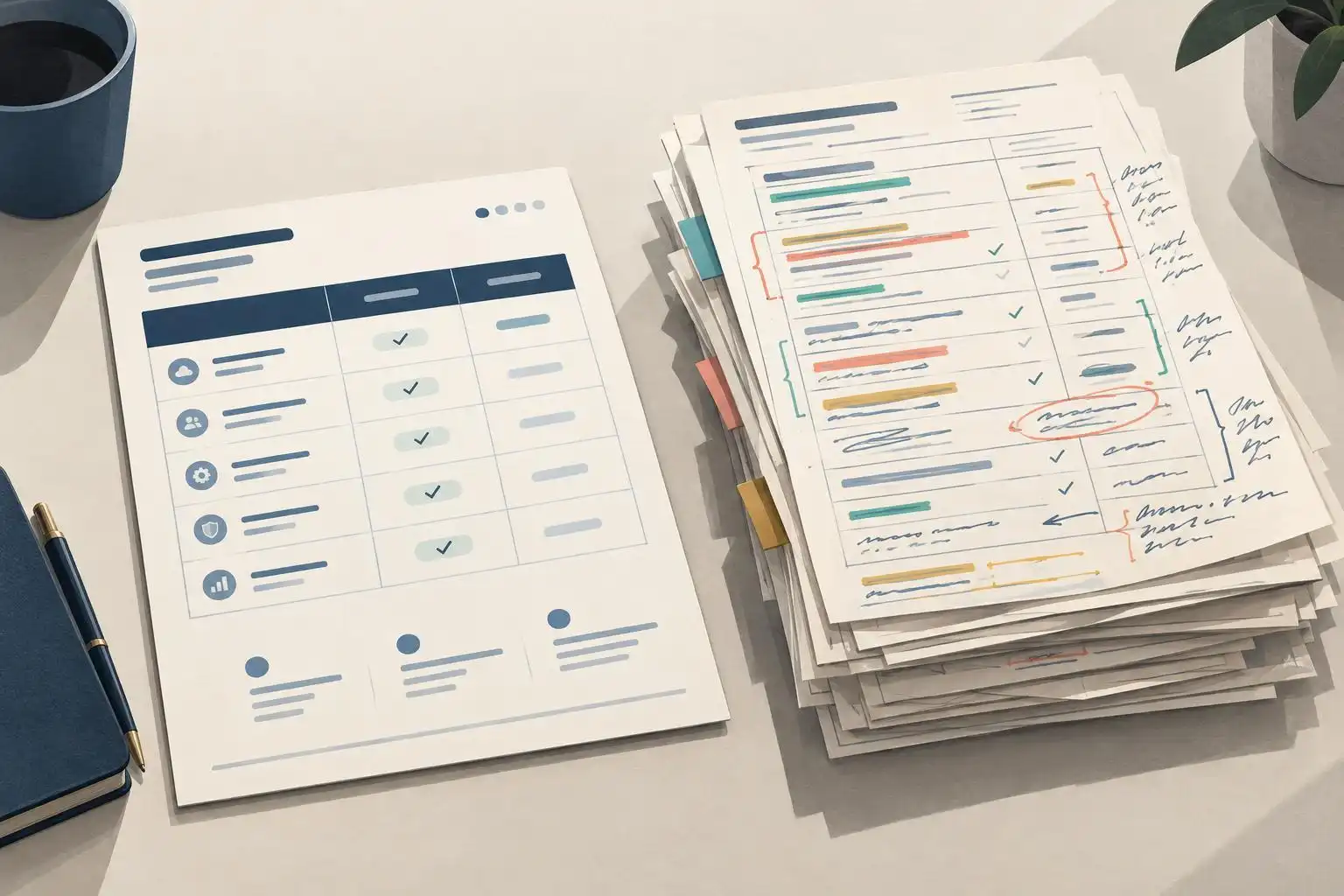

A founder tells me their product costs $3,000 a month plus usage. Then they show me the last six enterprise order forms. One customer has a lower overage rate. Another has a bigger included allowance. A third has a spend cap that nobody can explain. The published price is still $3,000 plus usage, but it is no longer the price the business actually sells.
A negotiated term can be the right way to win a valuable customer. The problem begins when each deal creates a new rule without anyone measuring what it costs, how it will be billed, or when it ends. At that point, your sales team is not just discounting your price book. It is writing a second one.
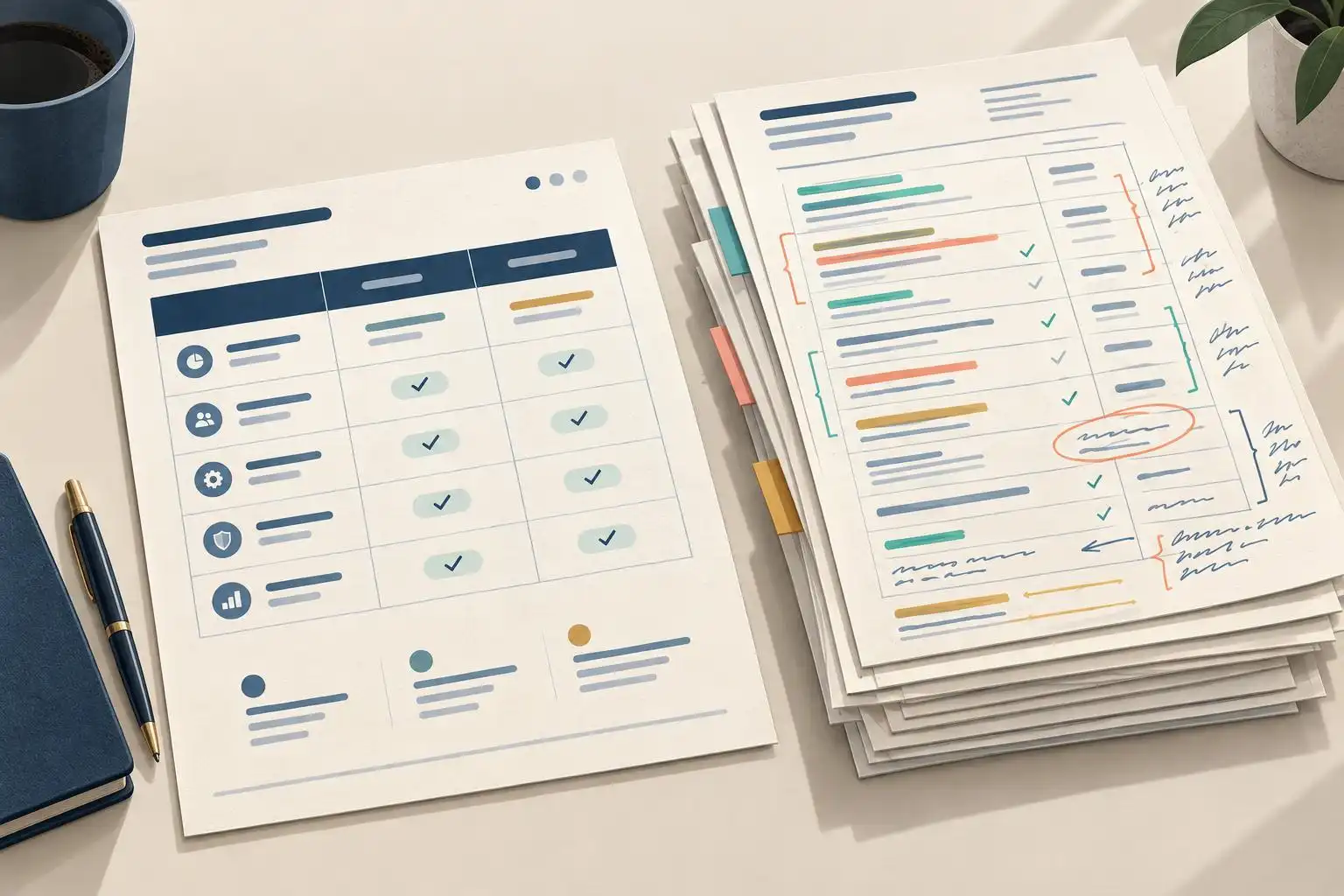
Measure the concession, not just the discount
Consider a hypothetical plan with a $3,000 monthly fee, two million events included, and $0.50 per thousand additional events. At eight million events, the bill is $6,000. If Sales negotiates the overage rate down to $0.30, the bill becomes $4,800. That single term gives away $1,200 a month at current usage, or $14,400 over a year if usage stays flat.
But usage may not stay flat. At 20 million events, the same rate concession is worth $3,600 a month. An approval based only on today’s invoice misses the shape of the bargain: you have discounted the customer’s future growth as well as its present spend.
For every proposed exception, calculate its effect at a plausible low, expected, and high usage level. Compare those bills with delivery costs, not just list prices. Usage pricing moves more consumption risk to the customer than a fixed seat price does; an exception that caps the customer’s bill can move that risk back to you.[1]
Treat every exception as a product decision
A useful exception record does not have to be elaborate. It does need to answer four questions before anyone signs:
- What changes? Specify the fee, allowance, rate, credit, cap, or measurement rule—not merely “custom pricing.”
- Why this customer? Name the economic reason, such as a minimum commitment, a longer term, or a clearly defined strategic benefit.
- How will it work? Identify the billing calculation and the product behavior required to honor it.
- When does it end? Set a term, renewal treatment, and owner for review.
That third question catches more deals than founders expect. A prepaid credit, for example, needs explicit drawdown, top-up, and expiry rules. A minimum commitment needs terms for overages and true-ups.[4] If the contract says “usage is capped,” someone must decide whether the product blocks usage at the cap or continues serving it without charge. A sentence in an order form cannot make that operational choice for you.
Separate a repeatable segment from a one-off favor
Exceptions are useful evidence about willingness to pay. If several customers in the same segment request the same allowance, that may be a packaging signal. If customers with unusually high volume consistently negotiate a lower marginal rate in exchange for a meaningful commitment, you may have discovered a viable published tier.
The test is whether you can describe the qualifying customer and the trade in advance. “Customers committing to at least $100,000 annually receive a lower overage rate” is a policy you can evaluate. “This logo felt important” is not. The first can become a package. The second accumulates as private precedent.
Large SaaS companies appear to treat this as cross-functional work, not simply a Sales approval. A Fivetran pricing role calls for analysis across product usage, deals, finance, and billing data; a separate deal-strategy role emphasizes consumption pricing, discounting, and margin considerations.[2][5] You do not need those teams to adopt the discipline. You do need Sales, Finance, and whoever owns billing to agree on what a deal actually promises.
Make the invoice prove the deal works
Before approving a new term, run it through the billing system using real-looking events. Check an ordinary month, a spike, and a month that crosses a pricing boundary. Graduated and volume rates can produce different bills at the same usage level, and a volume boundary can even lower the total bill when usage rises.[4] A salesperson’s spreadsheet is not proof that the invoice will match the contract.
Do the same for credits and customer-specific rates. A billing-system comparison suggests testing a proposed model by adding a rate, changing it, and inspecting the resulting invoice rather than relying on a feature checklist.[7] That is a sensible purchasing test, but it is also a deal-approval test: if you cannot demonstrate the exception end to end, you are asking the customer to trust a promise your operations may not be able to keep.
Give exceptions a route back into the price book
Once a quarter, group active exceptions by type and compare what they were expected to achieve with what happened. Did the lower rate secure the commitment? Did the allowance help adoption? Did a cap protect retention, or simply hide unprofitable usage? Look at the customer’s actual invoices and margin alongside the original approval.
Then choose a disposition for each recurring pattern: publish it as a standard offer, preserve it as a tightly defined enterprise option, or stop granting it. Assign a renewal decision to every remaining one-off term. This matters because account-management roles are explicitly expected to connect renewals and expansion with customer insights about pricing and packaging.[8] An exception with no review date will otherwise survive long after the reason for granting it has disappeared.
The goal is not to eliminate negotiation. It is to make each negotiation legible. Your best exceptions teach you where a new package belongs. Your worst ones quietly replace your pricing strategy, one signed order form at a time.
References
- Usage-based vs seat-based pricing: 5 models and when each works | Lago — https://getlago.com/blog/usage-based-vs-seat-based-pricing
- Senior Pricing & Monetization Data Scientist at Fivetran | Andreessen Horowitz — https://jobs.a16z.com/jobs/fivetran/8031705003–senior-pricing-monetization-data-scientist
- Usage-Based Billing: How It Works, Models & Examples (2026) — https://getlago.com/blog/usage-based-billing
- Global Head of Deal Strategy and Operations at Fivetran — https://jobs.a16z.com/jobs/fivetran/8196773003–global-head-of-deal-strategy-and-operations
- Lago vs Chargebee for SaaS and AI Usage Billing — https://getlago.com/blog/lago-vs-chargebee
- Director of Account Management at Rillet | Andreessen Horowitz — https://jobs.a16z.com/jobs/rillet/34f78d78-2d29-4584-a961-3d4c4dede0c8–director-of-account-management



Leave a Reply
You must be logged in to post a comment.